Thread Lift vs Facelift: What Really Happens to PDO Threads Under the Skin?
Thread Lift vs Facelift
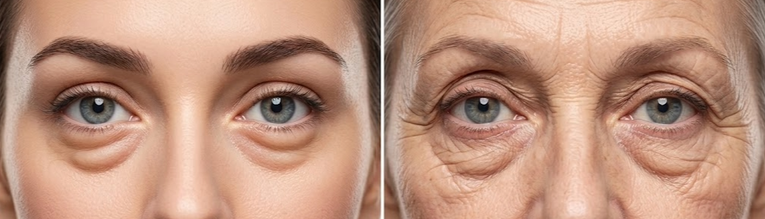
When facial aging begins to catch up, many people find themselves standing in front of the mirror, gently pulling their cheeks back with their fingers. It is natural to wonder: “How can I get this exact lifted look back permanently?”
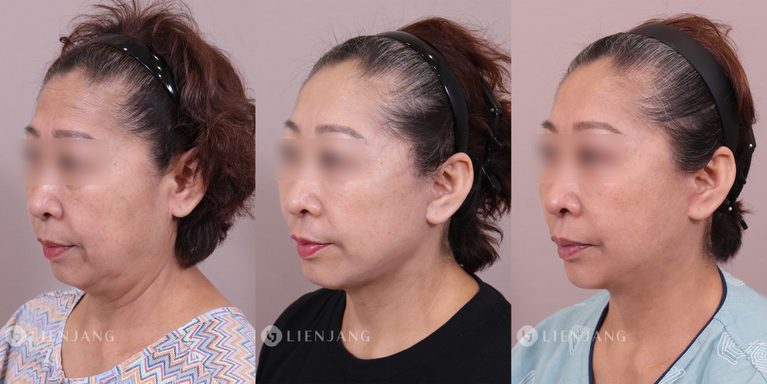
The definitive answer to structural sagging is a full facelift (rhytidectomy). By lifting both the skin and the underlying SMAS (Superficial Musculoaponeurotic System) layer, a surgical facelift delivers dramatic, long-lasting rejuvenation.

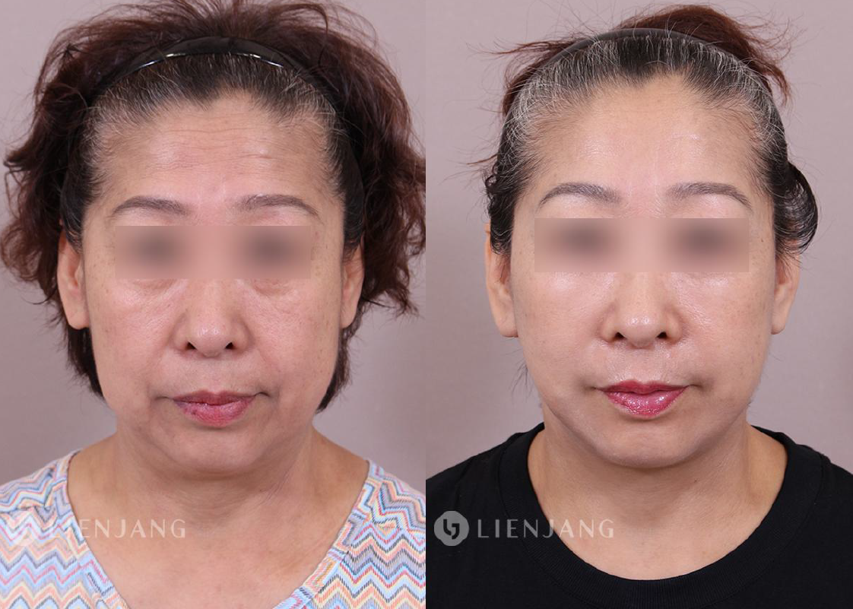
However, deciding on surgery isn’t always easy. Because a facelift involves incisions around the ears and dedicated downtime, many patients naturally turn to non-surgical or minimally invasive alternatives first.
Among these alternatives, Thread Lifting (using PDO, PLLA, or PCL threads) has long been a top favorite. Promoted as a quick “lunchtime procedure” with no incisions and rapid recovery, thread lifts promise to hook and hoist sagging tissues back into place.
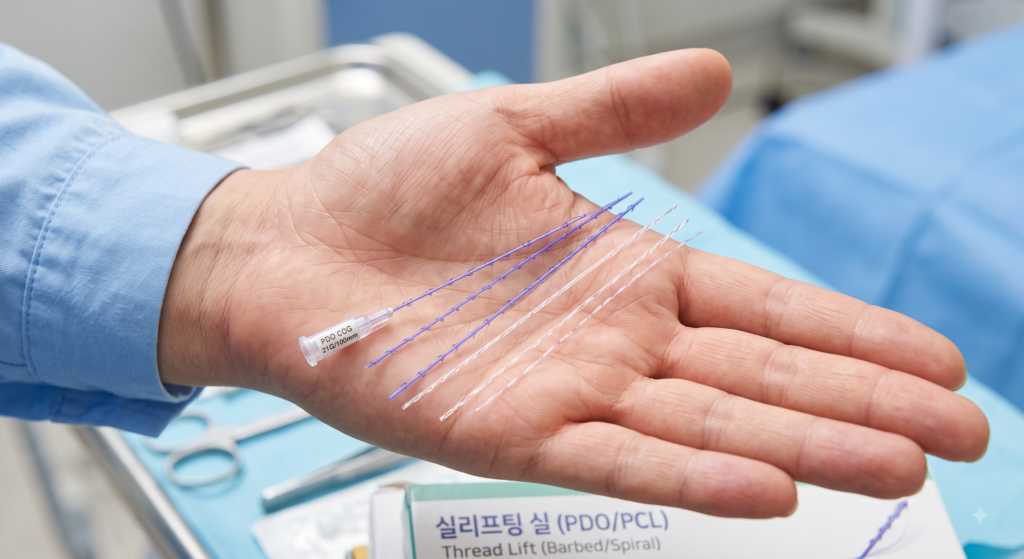
While thread lifts can yield good temporary improvements when tailored correctly, surgeons frequently meet patients who have undergone multiple thread procedures over the years—only to find the results fading quickly, leading them back to the surgical table.
This raises two common questions among prospective facelift patients:
- What actually happened to all those threads inserted into my face over the years?
- How do prior thread lifts and energy-based treatments impact a future surgical facelift?
Here is an insider look into what plastic surgeons observe during surgery, and how modern non-invasive trends are reshaping deep-plane facial rejuvenation.
1. “I Thought They Dissolved”: What We See During Facelift Surgery
“Doctor, I got thread lifts a few years ago. Haven’t they completely dissolved by now?”
This is one of the most frequent questions during facelift consultations. While materials like PDO (Polydioxanone), PLLA, and PCL are bioabsorbable and scientifically proven to hydrolyze over 6 to 24 months, the real story beneath the skin is more nuanced.
When dissecting the delicate plane between the sub-Q fat layer and the SMAS layer during surgery, surgeons rarely find “nothing.” Instead, we routinely encounter:
- Fibrotic Capsule Formation: Even after the thread material itself breaks down, the body treats it as a foreign object, leaving behind dense, band-like bands of scar tissue (fibrosis) along the thread tracks.
- Retained Anchors and Non-Absorbable Cogs: In patients who received permanent threads or heavy anchor points years ago, intact thread fragments and barbed cogs are frequently found embedded near retaining ligaments or facial nerve branches.
- Tissue Adhesions: The natural, gliding surgical plane between skin and SMAS becomes fused together, blurring anatomical boundaries.
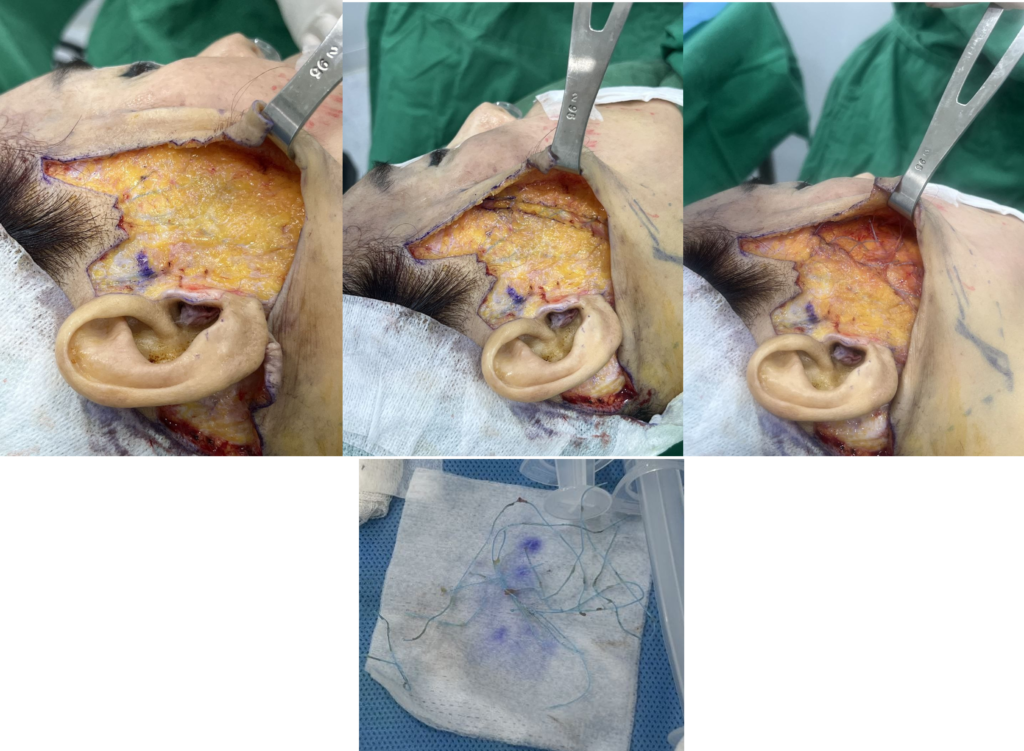
Intraoperative View: Uncovering the Reality of Prior Thread Lifts During Deep Plane Facelift
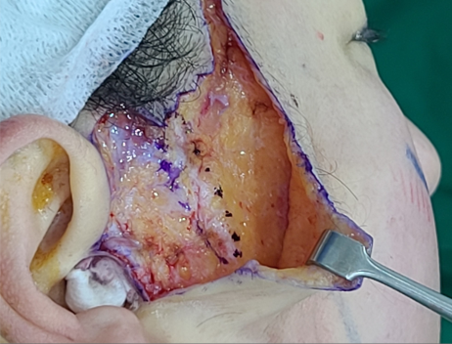
Observed during facelift surgery: Scar tissue remaining at the insertion site where the lifting thread dissolved.
2. How Prior Thread Lifts Impact Facelift Surgery
Having previous thread lifts does not make a facelift impossible. However, even if it is your first facelift (primary facelift), a history of multiple thread lifts means your procedure must be handled with the technical precision of a revision facelift.
| Impact Factor | Surgical Challenge | Clinical Outcome & Solution |
| 1. Dissection Difficulty | Dense fibrotic scar tissue impairs clear surgical visibility. | Extends operative time; requires high surgical expertise to create a smooth flap. |
| 2. Facial Nerve Risk | Scar tissue alters normal anatomy, pulling nerves into unexpected positions. | Nerves must be meticulously identified and protected through micro-dissection. |
| 3. SMAS Elasticity | Scarring stiffens the SMAS flap, reducing its natural flexibility. | Requires wider release of retaining ligaments and meticulous scar release to achieve an effortless lift. |
3. The “New Normal”: How Energy Devices & Fillers Alter Facial Anatomy
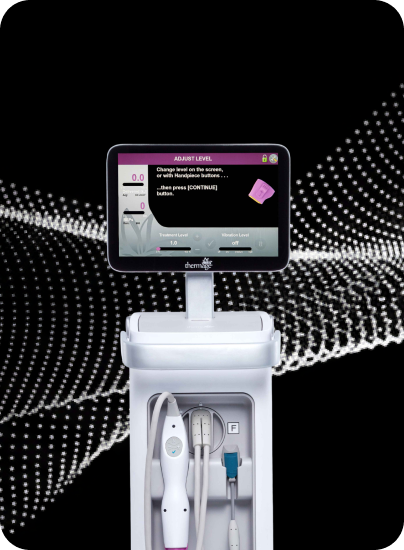
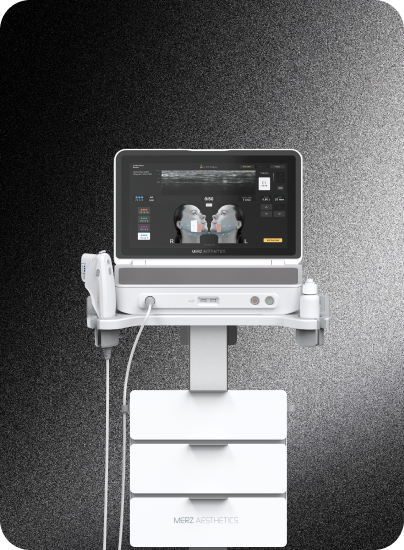
In modern aesthetics, most patients do not jump straight to surgery. The “New Normal” involves a multi-year history of non-surgical maintenance: HIFU/RF devices (e.g., Ultherapy, Thermage, InMode), facial liposuction, and dermal fillers (or biostimulators like Sculptra and Ellansé).
These pre-treatments alter the underlying tissue in distinct ways:
① HIFU & High-Frequency RF Devices
Repeated high-energy treatments deliver targeted thermal damage to tighten the SMAS. Over time, this can cause the SMAS layer to become thin, brittle, and fibrotic—resembling a rigid sheet rather than a supple, elastic tissue layer.
② Facial Liposuction & Fat-Dissolving Injections
Aggressive fat removal in the lower cheeks or double chin causes strong adhesions between the dermis and the underlying muscle fascia. Re-establishing a clean dissection plane without thinning the skin flap requires extreme care.
③ Non-Dissolvable Fillers & Biostimulators
Deep fillers that do not fully dissolve can intermingle with facial tissue, occasionally forming granulomas (inflammatory nodules). Part of the facelift process involves identifying, clearing, and clearing these foreign residues to restore healthy contours.
4. The Path to Lasting Rejuvenation: Integrated Anti-Aging Planning
In the past, a facelift was simply about trimming excess skin and pulling things tight. Today, modern high-definition facelifts are about anatomical restoration—untangling fibrotic adhesions, removing foreign materials, and structurally rebuilding the face.
Subtle, non-surgical procedures and deep surgical lifts should not be viewed as enemies. Instead, true age reversal relies on a cohesive, long-term master plan:
- Be Transparent About Your History: Always share a complete log of your past treatments (including thread types, energy devices, and filler locations) with your surgeon.
- Preserve Tissue Quality: Avoid over-treating the SMAS layer with aggressive energy devices if you plan on getting a surgical facelift within the next 5 to 10 years.
- Seek Integrated Expertise: Choose a board-certified plastic surgeon who specializes in both non-surgical facial shaping and advanced facelift surgery to design a safe, natural, and harmonious timeline for your face.
Considering Facial Rejuvenation in Korea?
Every face tells a unique structural story. If you are exploring whether a thread lift, energy treatment, or deep-plane facelift is right for your current tissue condition, schedule a personalized consultation with Dr. Jihwan Kim at Lienjang Plastic Surgery today.

Medical Disclaimer:The content provided on this blog is for informational and educational purposes only and does not constitute medical advice, diagnosis, or treatment. Individual surgical results may vary, and all medical or surgical procedures carry inherent risks. Always seek the advice of a qualified healthcare provider with any questions regarding a medical condition or treatment options.