Why Upper Blepharoplasty Can Look Unnatural: The Eye-Brow-Forehead Connection

When upper eyelid skin begins to sag, most people think of one immediate solution: Upper Blepharoplasty (upper eyelid surgery).

However, one of the most common complaints after traditional eyelid surgery is:

  • “My eyes look harsh and fierce rather than refreshed.”
  • “My eyebrows dropped, making my eyelids look puffy and crowded.”
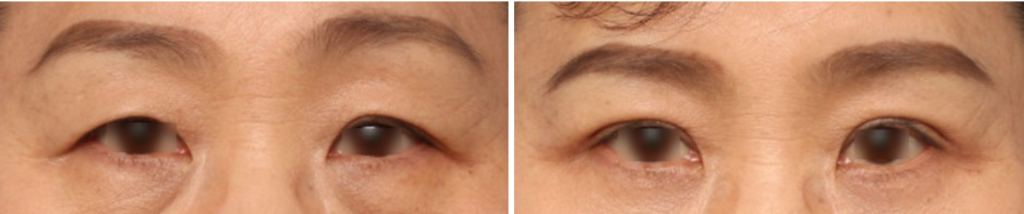
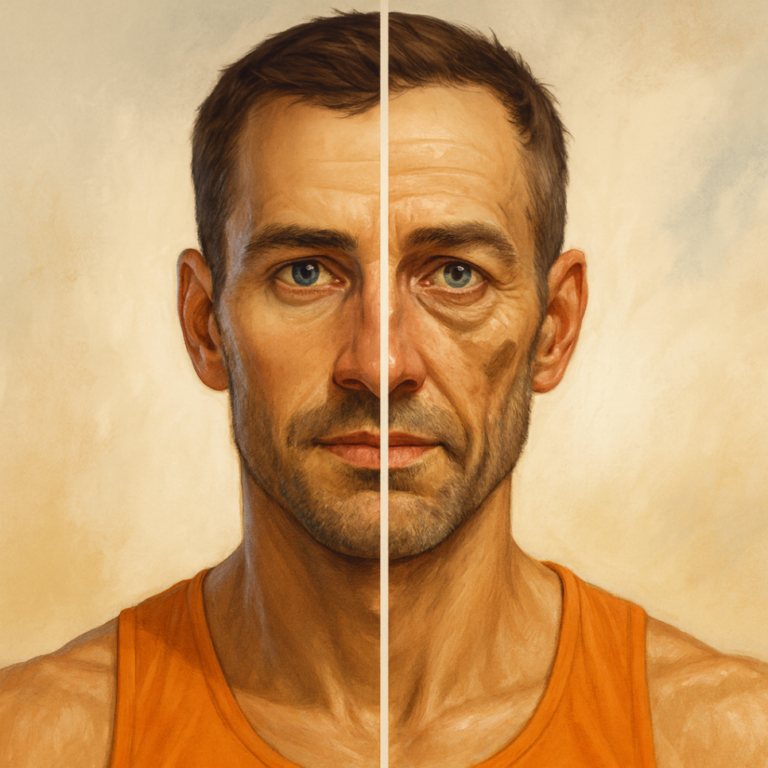
Comparison photos before and after upper blepharoplasty.Left (Before): The eyebrows are held high due to the compensatory action of the forehead muscles for sagging skin.Right (After): The surgery was successful, with the double eyelids more exposed and eye opening being easier. However, as the forehead muscles relaxed, the eyebrows dropped to their original position, narrowing the distance between the eyebrows and the double eyelids. The impression has become slightly harsher, and satisfaction is low.
oss of Forehead Compensation and Upper Eyelid Fullness: Once eyelid laxity is excised, the frontalis muscle relaxes and the eyebrows drop to their anatomical baseline. This descent compresses the upper eyelid tissues, leading to noticeable puffiness and thickness along the fold.
Loss of Forehead Compensation and Upper Eyelid Fullness: Once eyelid laxity is excised, the frontalis muscle relaxes and the eyebrows drop to their anatomical baseline. This descent compresses the upper eyelid tissues, leading to noticeable puffiness and thickness along the fold.

Why does this happen? The issue is rarely poor surgical technique. Rather, it stems from treating the eyelid as an isolated feature rather than recognizing that the eye, eyebrow, and forehead function as a single anatomical unit.

1. The Hidden Cause: Frontalis Muscle Compensation

As eyelid skin loses elasticity over time, the body instinctively recruits the frontalis muscle (forehead muscle) to lift the eyebrows and keep the visual field clear.

Without realizing it, you may have been using your forehead to keep your eyes open for years.
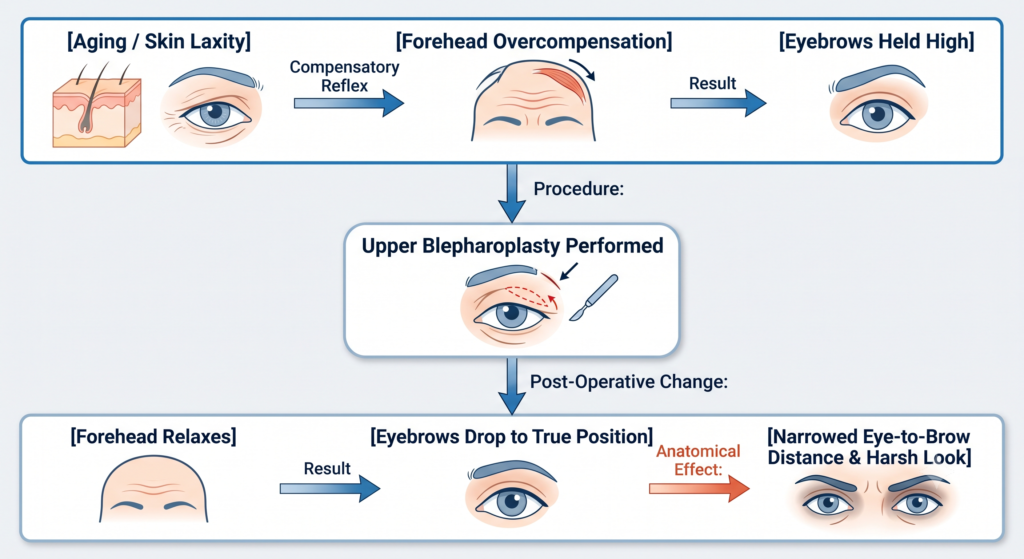
A flowchart illustrating the anatomical changes before and after upper blepharoplasty. It shows how the forehead muscle compensates for aging skin laxity by holding the eyebrows high, and how the subsequent relaxation of this muscle after surgery can cause the eyebrows to drop to their true position, narrowing the eye-to-brow distance and creating a harsher look.

When excess eyelid skin is surgically excised:

  1. The mechanical need to lift the forehead disappears.
  2. The frontalis muscle relaxes completely.
  3. The eyebrows drop down to their natural, lower position.

As a result, the distance between the eyes and eyebrows shortens significantly, creating a crowded, heavy eyelid fold and an unintended severe or angry expression.

2. The Upper Facial Anatomy: A Delicate Muscular Balance

The upper third of the face relies on a dynamic balance between elevating and depressing muscle groups:

  • Frontalis (Forehead Elevator): Pulls the eyebrows upward.
  • Orbicularis Oculi (Eye Sphincter): Closes the eyelids and pulls the lateral brow downward.
  • Corrugator & Procerus (Glabellar Depressors): Pull the eyebrows medially and downward, forming frown lines.

Altering just one component—such as skin tension at the eyelid margin—shifts the equilibrium across the entire upper face.

3. Upper Blepharoplasty vs. Brow Lift vs. Forehead Lift: Which Is Right for You?

ProcedurePrimary IndicationIncision SiteKey Advantages
Upper BlepharoplastyEyelid skin redundancy with normal or high brow positionNatural crease lineDirect fold reshaping, fast recovery
Sub-Brow Lift (Infrabrow Excision)Lateral hooding with thick upper eyelid skinDirectly beneath the eyebrow borderPreserves delicate eyelid skin; avoids unnatural double-fold thickening
Endoscopic Forehead / Brow LiftSignificant brow ptosis, deep forehead creases, heavy glabellar linesMinimal incisions hidden inside the hairlineElevates the entire brow-forehead complex, opens the upper gaze without touching the eyelids

4. Why Combination Approaches Deliver Superior Results

Because facial aging rarely affects just one structure in isolation, tailored combination procedures often yield the most harmonious, long-lasting outcomes:

  • Upper Blepharoplasty + Sub-Brow Excision: Corrects central eyelid laxity while clearing heavy lateral hooding without tension.
  • Endoscopic Forehead Lift + Blepharoplasty: Restores the dropped brow arch first, allowing minimal, precise skin removal for an open, youthful expression.
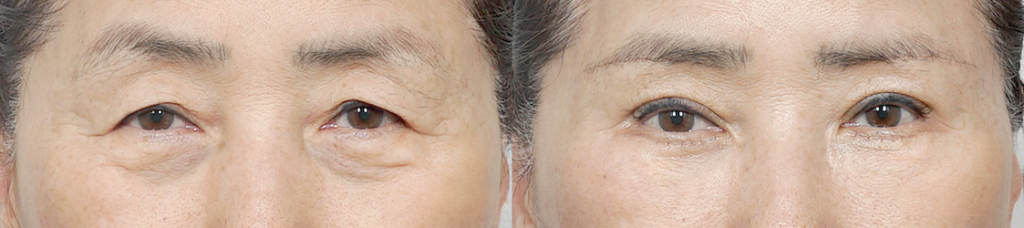
Case 1: A female patient in her 60s presented with severe upper eyelid laxity. To achieve a soft and natural outcome, a combined sub-brow lift and upper blepharoplasty was performed.
Left: Pre-op / Right: 1 Week Post-op
Case 1: A female patient in her 60s presented with severe upper eyelid laxity. To achieve a soft and natural outcome, a combined sub-brow lift and upper blepharoplasty was performed.
Left: Pre-op / Right: 1 Week Post-op
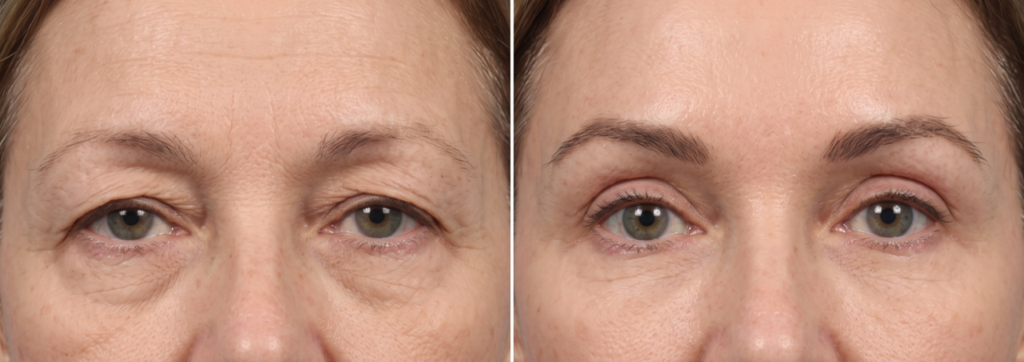
Case 1: A female patient in her 60s presented with sagging upper eyelids. Due to concurrent brow ptosis and eyelid skin laxity, a combined endoscopic forehead lift and upper blepharoplasty was performed, achieving a natural yet defined, refreshed eye appearance.

Left: Pre-op / Right: 1 Month Post-op
Case 2: A female patient in her 60s presented with sagging upper eyelids. Due to concurrent brow ptosis and eyelid skin laxity, a combined endoscopic forehead lift and upper blepharoplasty was performed, achieving a natural yet defined, refreshed eye appearance.
Left: Pre-op / Right: 1 Month Post-op
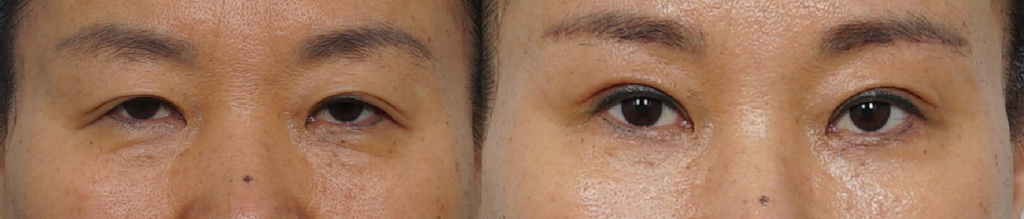
Case 3: A female patient in her 50s with thick upper facial tissue presented with severe brow ptosis, significant eyelid hooding, and weak levator function. Because heavy forehead compensation indicated that traditional upper blepharoplasty alone would worsen the brow descent, an endoscopic forehead lift was performed. Concurrently, sub-brow excision addressed the severe skin laxity, and incisional ptosis correction was performed to achieve clear, bright, and natural-looking eyes.

Left: Pre-op / Right: 1 Month Post-op
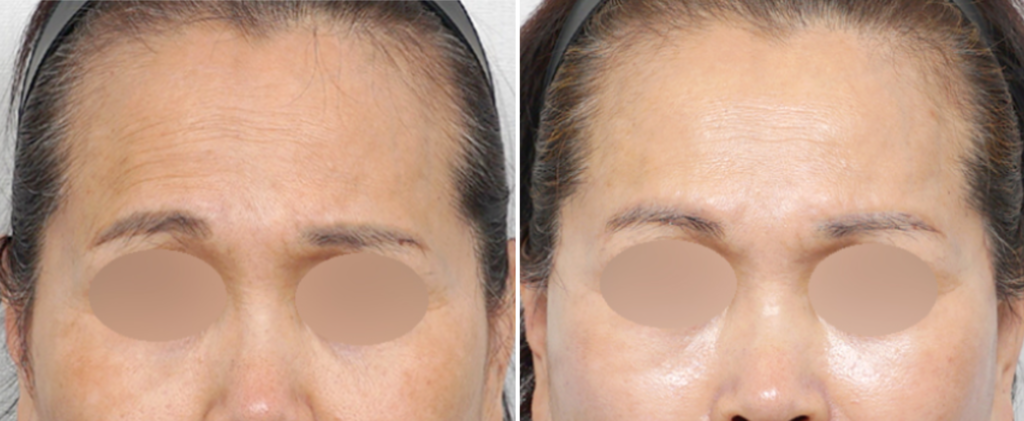
Case 3: A female patient in her 50s presented with severe eyebrow ptosis and low-set double eyelids. A combined approach of endoscopic forehead lift and non-incisional upper blepharoplasty with ptosis correction was performed to restore a natural, brighter, and refreshed facial impression.
Left: Pre-op / Right: 1 Month Post-op
Case 4: A female patient in her 50s with thick upper facial tissue presented with severe brow ptosis, significant eyelid hooding, and weak levator function. Because heavy forehead compensation indicated that traditional upper blepharoplasty alone would worsen the brow descent, an endoscopic forehead lift was performed. Concurrently, sub-brow excision addressed the severe skin laxity, and incisional ptosis correction was performed to achieve clear, bright, and natural-looking eyes.

Left: Pre-op / Right: 1 Month Post-op
Case 4: A female patient in her 50s with thick upper facial tissue presented with severe brow ptosis, significant eyelid hooding, and weak levator function. Because heavy forehead compensation indicated that traditional upper blepharoplasty alone would worsen the brow descent, an endoscopic forehead lift was performed. Concurrently, sub-brow excision addressed the severe skin laxity, and incisional ptosis correction was performed to achieve clear, bright, and natural-looking eyes.
Left: Pre-op / Right: 1 Month Post-op
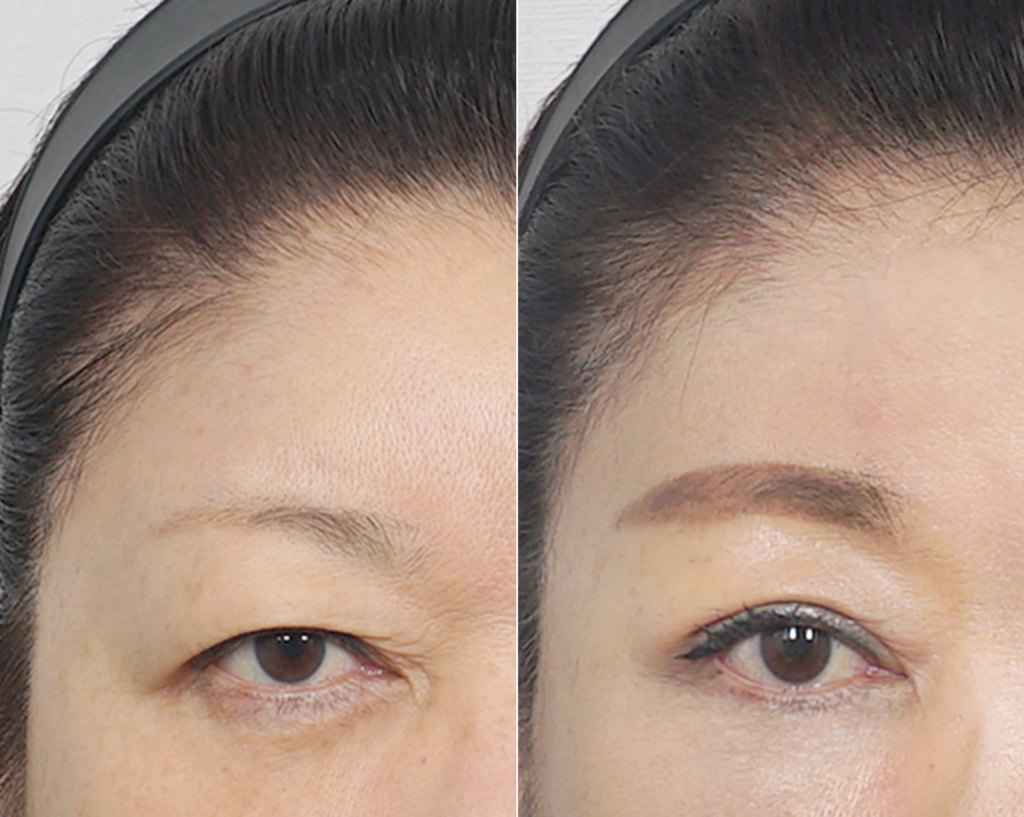
Case 5: A female patient in her 60s presented with severe brow ptosis and noticeable asymmetry. Due to her broad forehead, she opted against an endoscopic forehead lift; therefore, a direct brow lift was performed. Following the surgery, the brow descent and asymmetry were successfully corrected, alongside an improvement in forehead wrinkles. Pre-op vs. 1Mo Post-op. Left: Pre-operative | Right: Restored brow position and refreshed eye area.

5. Precise Diagnostic Checklist Before Eye Rejuvenation

An optimal surgical plan begins with an accurate anatomical diagnosis rather than a standardized procedure. Key assessment factors include:

  • Forehead Compensation Test: How much does eyelid opening change when the forehead muscle is manually stabilized?
  • Brow-to-Lash Distance: Is the eyebrow positioned below the superior orbital rim?
  • Skin Thickness Gradient: Is the laxity due to thin eyelid tissue or descending thick supraorbital skin?
  • Levator Muscle Function: Is there underlying ptosis (muscle weakness) affecting eye opening?

Frequently Asked Questions (FAQ)

Q1. Will upper blepharoplasty change my overall facial impression?

If you have low or descending eyebrows, removing eyelid skin alone can bring the eyebrows closer to the eyes, potentially creating a sharper or heavier look. A thorough pre-operative assessment of brow mobility prevents this outcome.

Q2. How do I know if I need a brow lift instead of eyelid surgery?

If resting your forehead makes your eyes feel significantly heavier, or if your eyebrows sit low and crowd your upper eyelids, lifting the brow complex—either via a sub-brow excision or an endoscopic forehead lift—will yield a much more natural result.

Q3. Can these procedures be combined with lower eyelid surgery?

Yes. Upper facial rejuvenation is frequently paired with lower blepharoplasty or subconjunctival fat repositioning to achieve complete periorbital harmony.

Dr. Jihwan Kim

Similar Posts