Under-Eye Fat Repositioning vs. Lower Blepharoplasty: Which Procedure Is Right for You?
Do you constantly hear that you look tired, fatigued, or older than your actual age?
The skin around the eyes is the thinnest on the human body and experiences constant movement. Because of this, it is often the very first area to exhibit visible signs of aging. When patients visit our clinic seeking lower eyelid rejuvenation, the most common dilemma they face is deciding between Under-Eye Fat Repositioning (Transconjunctival Fat Repositioning) and Lower Blepharoplasty.
While both procedures target under-eye puffiness, their surgical approaches, recovery timelines, and ideal candidates differ substantially.
Here is a definitive guide from a board-certified plastic surgeon to help you identify the right solution for your unique anatomy.
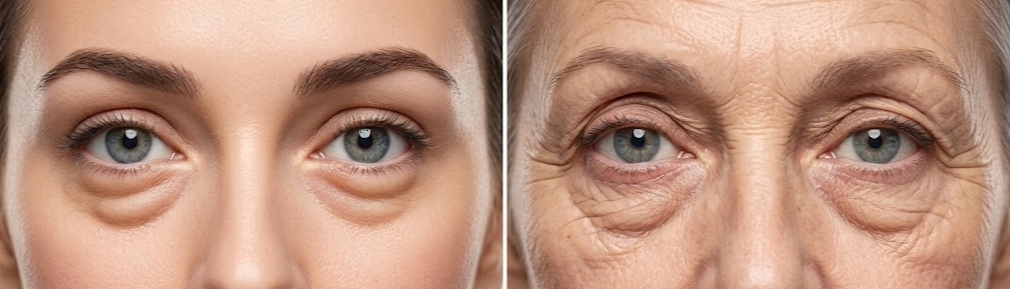
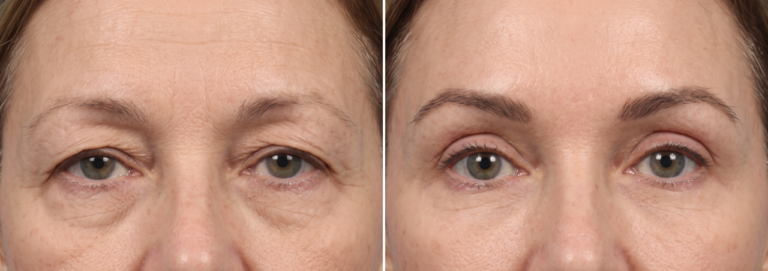
Right Image: A suitable case for lower blepharoplasty (subciliary incision). This more comprehensive surgery is typically best for older individuals (as shown) with significant skin sagging, deep wrinkles, and lax muscle tone. It involves removing excess skin and fat and tightening the underlying structures for a radical lifting and rejuvenation effect.
1. The Anatomy of Under-Eye Aging: 3 Primary Causes
Under-eye hollowness and dark circles are rarely caused by a single isolated factor. They generally result from a combination of three anatomical changes:
- Orbital Fat Protrusion & Tear Trough Formation : As the orbital septum (the fibrous membrane supporting the fat pads) weakens over time, orbital fat pushes forward. This herniation creates puffy bags, casting a deep shadow over the sunken tear trough ligament below.
- Loss of Skin Elasticity & Fine Lines : Dermal collagen and elastin diminish, causing the thin periorbital skin to loosen and wrinkle.
- Orbicularis Oculi Muscle Laxity : The underlying circular eye muscle loses tone and sags downward, exacerbating the protruding fat bags.
Key Takeaway: If your primary issue is protruding fat with firm skin, Under-Eye Fat Repositioning is ideal. If you also have significant skin sagging, excess tissue, and muscle laxity, Lower Blepharoplasty is the definitive answer.
2. Under-Eye Fat Repositioning: Scarless, Rapid Recovery

How It Works
Instead of making an external skin cut, the surgeon creates a microscopic incision on the inner red mucosal lining (conjunctiva) of the lower eyelid. Rather than simply removing the fat, the protruding fat pads are meticulously flattened and anchored into the depressed tear trough depression under the periosteum.
- Incision Site: Inside the eyelid (transconjunctival) — 100% scarless externally.
- Ideal Candidates:
- Patients in their 20s to 40s (or older individuals with well-preserved skin elasticity).
- Individuals with bulging fat bags and dark shadows, but minimal skin sagging.
- International travelers or busy professionals needing a rapid recovery without visible stitches.
- Downtime: 3 to 5 days for minor swelling and bruising; no suture removal required.
- Limitation: Does not excise excess sagging skin or eliminate deep, dynamic wrinkles.

3. Lower Blepharoplasty: Comprehensive Rejuvenation for Sagging & Wrinkles
How It Works
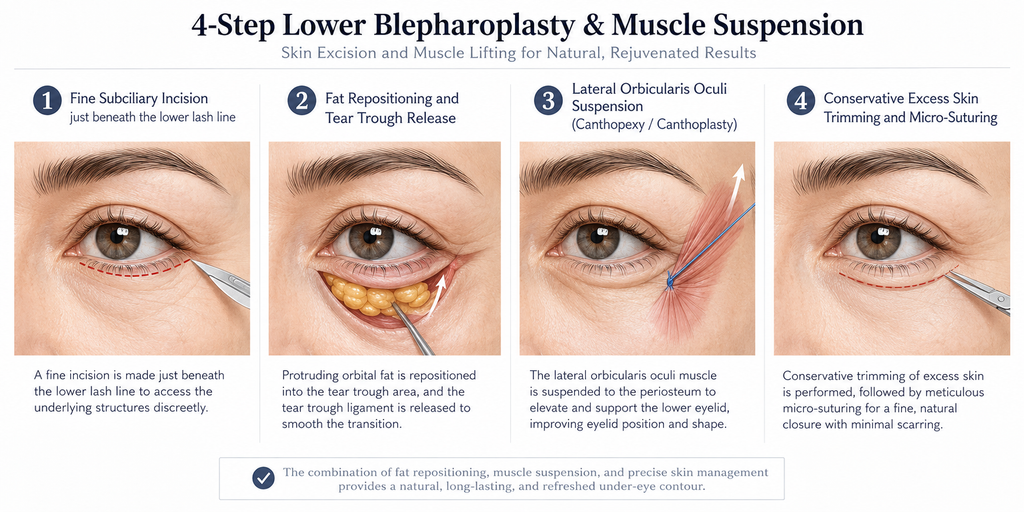
Lower blepharoplasty involves a delicate incision made just along the lower lash line. This allows direct access to reposition herniated fat, elevate and tighten the sagging orbicularis oculi muscle (via canthopexy), and conservatively excise excess redundant skin.
- Incision Site: Subciliary line (fades into a faint, virtually invisible line beneath the lashes).
- Ideal Candidates:
- Patients typically aged 50+ or those with pronounced skin excess and crepey under-eye skin.
- Individuals with severe muscle laxity and deep structural wrinkles.
- Downtime: Stitches removed on Day 5–7; major swelling subsides within 1–2 weeks.
- Key Advantages: Solves excess skin, deep wrinkles, muscle sagging, and fat protrusion in a single comprehensive procedure.


4. The Borderline Dilemma: Hybrid & Complementary Approaches
Many patients fall into a borderline category: “My skin has a slight amount of laxity, but I don’t want a long recovery or visible external incisions.”
In these cases, a tailored combination approach yields optimal results:
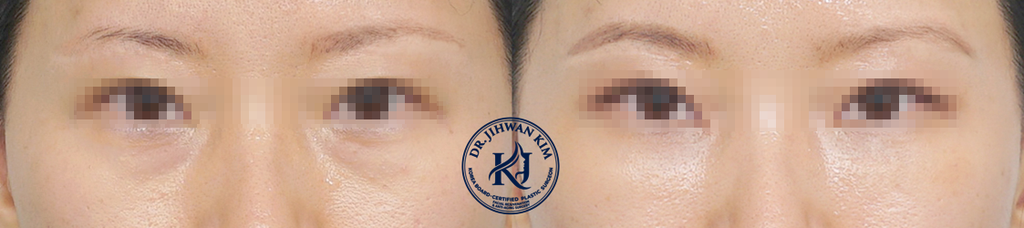
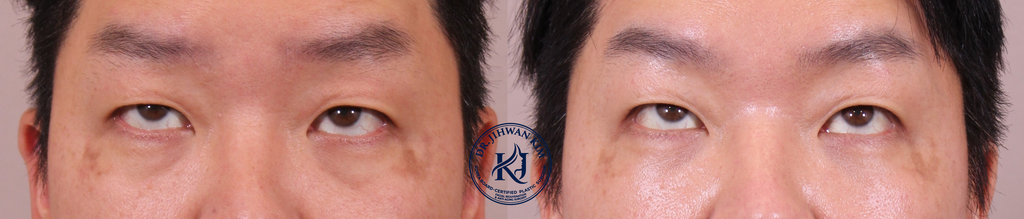
Orbital fat was smoothly repositioned through an internal conjunctival incision, while micro-autologous fat grafting was additionally performed to address the generalized volume deficiency spanning from the under-eye to the anterior cheek (midface) area.

- Transconjunctival Fat Repositioning + Mini Muscle Suspension:Fat is repositioned via an internal conjunctival incision, while a tiny micro-incision at the outer corner suspends the lateral muscle to deliver a subtle lift without full skin excision.
- Transconjunctival Fat Repositioning + Micro-Autologous Fat Grafting (Nano-Fat):Harvesting purified nano-fat and delicately grafting it into the mid-cheek and sunken infraorbital rim restores 3D volume, gently tightening minor skin laxity and improving skin radiance.
- Skin Booster & Laser Synergy (Rejuran I / Radiofrequency):Post-operative intradermal polynucleotide therapy or RF tightening strengthens collagen synthesis in thin, crepey dermal layers.
5. Summary: Quick Self-Assessment Guide
| Feature | Under-Eye Fat Repositioning | Lower Blepharoplasty |
| Incision Location | Inside conjunctiva (Scarless) | Subciliary skin line (Under lashes) |
| Target Issues | Bulging fat, tear trough hollowness, shadows | Severe skin laxity, deep folds, muscle descent + fat |
| Skin / Wrinkle Removal | No (Focuses on contour smoothing) | Yes (Excision of redundant skin & lifting) |
| Suture Removal | Not needed | Day 5 – 7 post-op |
| Recovery Period | 3 – 5 days | 1 – 2 weeks |
| Typical Demographic | 20s to 40s (Good skin elasticity) | 50s and above (Moderate to severe skin laxity) |
📌 Decision Checklist
- Puffy fat bags, but smooth/elastic skin? 👉 Under-Eye Fat Repositioning
- Loose, overlapping skin folds and deep wrinkles? 👉 Lower Blepharoplasty
- Mild skin laxity, but want to avoid open skin incisions? 👉 Fat Repositioning + Micro-Fat Graft / Energy-Based Tightening
- Flat midface and severe hollows beneath the eye? 👉 Fat Repositioning + Nano-Fat Grafting
6. Frequently Asked Questions (FAQ)
Q. Can under-eye fat return after fat repositioning?
A. When orbital fat is accurately anchored beneath the periosteum and the orbital septum is reinforced, recurrence is exceptionally rare. However, the natural aging process of surrounding tissues continues gradually over the decades.
Q. What causes ectropion (eyelid turning outward) after lower blepharoplasty, and how is it prevented?
A. Ectropion occurs if an excessive amount of skin is removed or if the lateral eyelid support is not adequately stabilized. A skilled surgeon precisely measures skin redundancy in an upright position and consistently performs lateral canthopexy (muscle anchoring) to maintain firm lower lid position.
Q. How soon can international patients fly home or wear makeup?
- Under-Eye Fat Repositioning: Flying is safe after 48 hours; light eye makeup can be worn after 5–7 days.
- Lower Blepharoplasty: Flying is recommended after stitch removal (Day 6–7); light makeup can resume immediately after suture removal. Contact lenses should be avoided for 2–3 weeks.
Achieving natural, revitalized eyes requires more than simply excising fat; it requires an intricate structural realignment tailored to your unique facial balance.
If you are planning your medical visit to Seoul or seeking expert guidance on under-eye rejuvenation, contact our international coordinator team to schedule a virtual or in-person evaluation.


Medical Disclaimer:The content provided on this blog is for informational and educational purposes only and does not constitute medical advice, diagnosis, or treatment. Individual surgical results may vary, and all medical or surgical procedures carry inherent risks. Always seek the advice of a qualified healthcare provider with any questions regarding a medical condition or treatment options.