Lower Blepharoplasty Complications: Symptoms, Non-Surgical Care, and Surgical Correction for Ectropion
Lower Blepharoplasty Complications
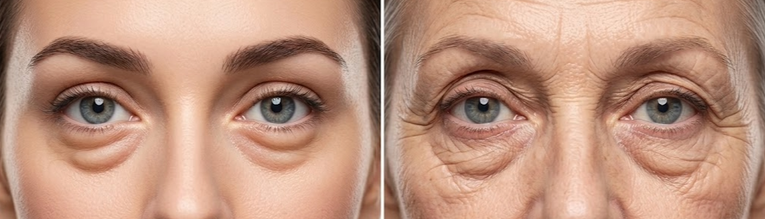
Lower blepharoplasty (lower eyelid surgery) is a representative facial rejuvenation procedure that smooths out under-eye bags and loose skin to create a refreshed, youthful appearance. However, depending on the surgical technique or individual healing response, patients may occasionally experience unexpected side effects.
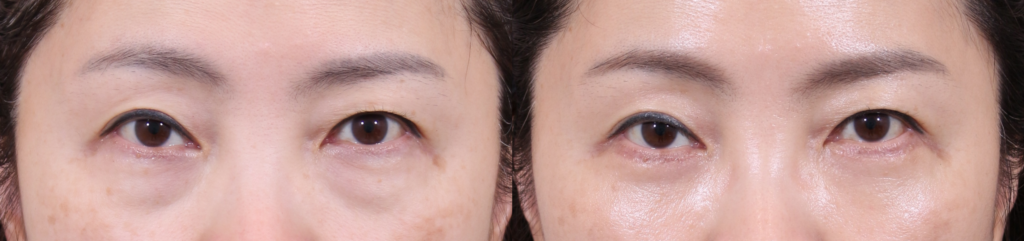
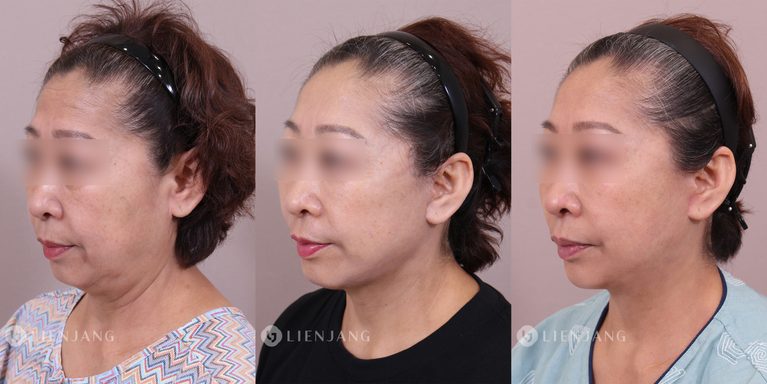
Left: Pre-op | Right: 1 Month Post-op
Among these, Ectropion (eyelid eversion or outward turning of the lower lid) is one of the most well-known and distressing complications for patients.
In this post, I will break down the causes of post-blepharoplasty ectropion, identify high-risk candidates, and outline both early conservative non-surgical management and surgical revision strategies.
Executive Summary
- Ectropion occurs when the lower eyelid turns outward due to factors like excessive skin excision, internal scar tethering, or weakened eyelid support structures.
- During the early post-operative phase (Months 1–3), conservative non-surgical treatments such as taping, massage, and scar-softening injections are used while monitoring recovery.
- If symptoms persist after 3 to 6 months, tailored corrective surgery—such as canthopexy/canthoplasty, skin grafting, or a midface lift—may be required.
1. What is Post-Blepharoplasty Ectropion?
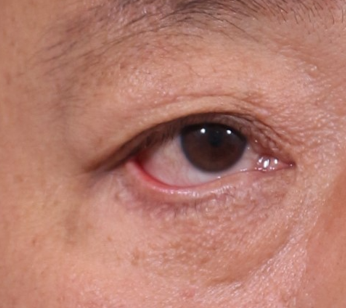
Ectropion refers to a condition where the margin of the lower eyelid pulls away and rolls outward, exposing the red conjunctival mucosa on the inner side of the lid.
When the lower eyelid fails to maintain proper contact with the surface of the eyeball, several functional symptoms occur:
- Epiphora (Excessive Tearing): Tears cannot drain normally into the lacrimal punctum and spill over onto the cheek.
- Dry Eyes & Foreign Body Sensation: Continuous air exposure leads to dryness, irritation, and a gritty, sandy feeling in the eye.
- Hyperemia & Secondary Complications: The eye becomes chronically red, which can progress to conjunctivitis or keratitis (corneal inflammation) in severe cases.
2. 4 Primary Causes of Post-Blepharoplasty Ectropion
The main factors contributing to ectropion after lower eyelid surgery include:
- Excessive Skin Excision: Trimming too much skin in an attempt to completely eliminate under-eye wrinkles creates strong downward traction, pulling the eyelid margin down.
- Internal Scar Contraction (Cicatricial Tethering): As deep tissue scar bands mature inside the incision area, they can shrink and pull the lower eyelid downward.
- Orbicularis Oculi Muscle Weakness: Damage to or weakness of the orbicularis oculi muscle—the key support structure maintaining eyelid tone—prevents the lid from clinging tightly to the globe.
- Pre-existing Lower Eyelid Laxity (Lateral Canthal Tendon Laxity): If a patient already had a loose lateral canthal tendon prior to surgery and skin was excised without reinforcing lid stability, ectropion is highly likely to occur.
3. Who is at High Risk for Ectropion?
Patients with the following anatomical characteristics require a particularly thorough pre-operative evaluation:
- Severe Eyelid Laxity: Individuals whose lower eyelid returns slowly after being gently pulled forward (poor snap-back test).
- Elderly Patients: Aging naturally weakens the structural tendons and muscle tone surrounding the eye.
- Revision Blepharoplasty Patients: Previous surgeries leave limited residual skin and increased deep scar tissue.
- Prominent/Proptotic Eyes: Eyes that project forward or have a flat malar (cheekbone) support structure offer less natural underlying frame for the lower lid to rest on.
4. Non-Surgical Early Interventions (Months 1 to 3)
Ectropion appearing immediately after surgery is often temporary, caused by acute swelling or transient tissue tightness, and frequently resolves as tissues mature. Therefore, conservative management is prioritized in the early months:
- Eyelid Taping: Taping the lower eyelid in an upward and outward direction (anchoring to the cheekbone or brow) neutralizes downward traction forces.
- Targeted Eyelid Massage: Starting 2 to 3 weeks post-op (when scar tissue hardens), gentle upward massage helps release deep tissue adhesions.
- Ocular Protection (Artificial Tears & Ointments): Preservative-free lubricating drops and ophthalmic ointments prevent corneal desiccation.
- Scar-Softening Injections: Injected directly into rigid scar bands to promote tissue softening and relaxation.
5. Surgical Correction Options (After 3 to 6 Months)
If conservative therapy does not yield sufficient improvement or if there is a risk of corneal damage, surgical revision is evaluated.
| Revision Technique | Description & Effects | Primary Indication |
| Canthopexy / Canthoplasty | Re-anchors and tightens the lax lateral canthal tendon to the orbital rim, restoring structural lid support. | Severe eyelid laxity or tendon weakness. |
| Full-Thickness Skin Graft (FTSG) | Harvests skin (e.g., from the upper eyelid or behind the ear) to replenish vertical skin deficiency. | Significant vertical skin shortage from over-excision. |
| Midface Lift | Elevates midface soft tissue upward to recruit cheek tissue into the lower eyelid region. | Need for tissue replenishment without skin grafting. |
| Scar Release | Cuts and releases internal scar bands via a transconjunctival or incisional approach. | Ectropion caused primarily by deep scar contraction. |

Left: Pre-op
Right: 1 Week Post-op

Left: Pre-op
Right: 1 Week Post-op

Left: Pre-op
Right: 1 Week Post-op
Conclusion
Experiencing ectropion after lower blepharoplasty can be distressing, but many early-stage cases improve significantly with timely non-surgical care like taping, massage, and targeted injections.
Even if surgical correction becomes necessary, addressing the specific underlying cause allows for successful restoration of both function and aesthetics. I recommend consulting closely with your surgeon to establish a structured, step-by-step recovery plan.

Medical Disclaimer:The content provided on this blog is for informational and educational purposes only and does not constitute medical advice, diagnosis, or treatment. Individual surgical results may vary, and all medical or surgical procedures carry inherent risks. Always seek the advice of a qualified healthcare provider with any questions regarding a medical condition or treatment options.