Endoscopic Deep Plane Facelift: How I Achieve True Vertical Rejuvenation with Tailored, Discreet Incisions
Endoscopic Deep Plane Facelift
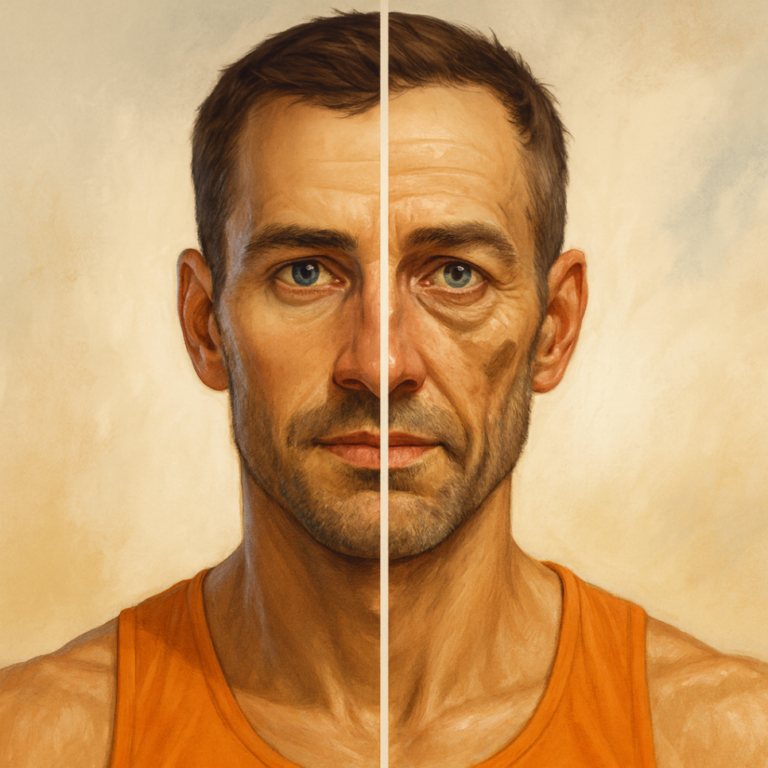
In aesthetic consultations, patients across different age groups often share a familiar concern:
“Non-surgical lasers and thread lifts can no longer manage my sagging jowls and deep nasolabial folds. However, I want to avoid conspicuous scars across my face and the dreaded ‘windswept’ look.”
Whether addressing genetic cheek descent in your 20s and 30s, post-bone contouring laxity, or advanced skin sagging in your 40s and 50s, modern facial rejuvenation does not rely on a “one-size-fits-all” incision.
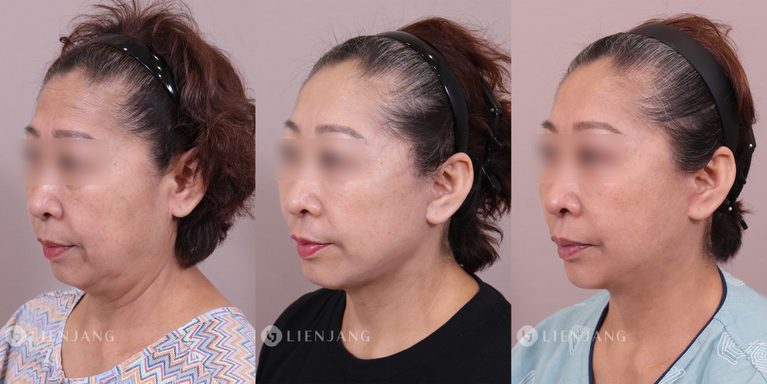
The Endoscopic Deep Plane Facelift bridges structural deep-tissue elevation with customized incision design, ensuring powerful vertical rejuvenation with minimally noticeable scarring.
What is an Endoscopic Deep Plane Facelift?
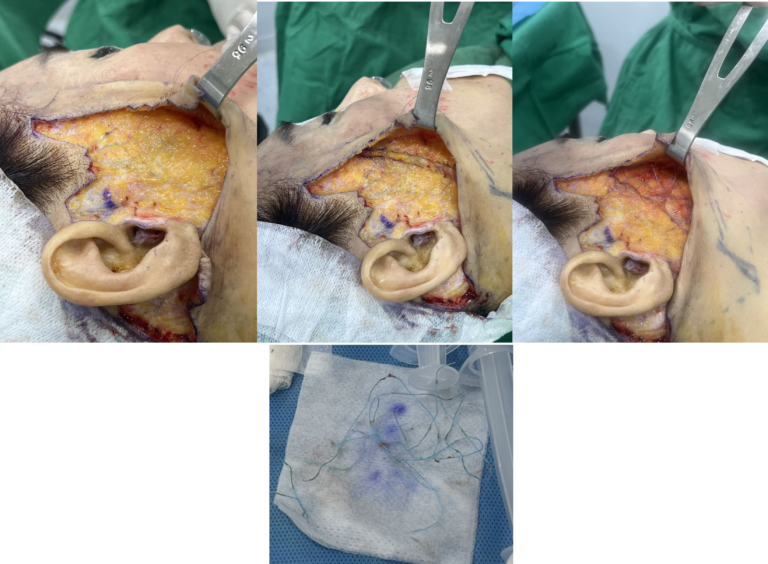
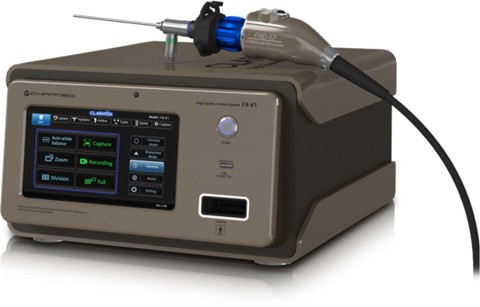
An Endoscopic Deep Plane Facelift combines high-definition endoscopic visualization with deep anatomical plane release (Sub-SMAS and retaining ligaments).
Unlike conventional superficial lifts that simply pull and stretch the skin laterally, this method elevates the deep architectural framework vertically, adapting incision lengths strictly to the patient’s degree of skin excess.
3 Core Surgical Principles I Practice
1. Incision Tailored to Skin Elasticity & Redundancy
A major strength of this technique is its adaptability. We do not make large incisions if there is no excess skin to remove:
- For Mild to Moderate Laxity (Early Aging / Good Elasticity): Incisions remain 100% hidden within the temporal hair and the postauricular groove behind the ear.
- For Moderate to Advanced Skin Redundancy: When significant skin bunching occurs during vertical repositioning, the incision is conservatively extended along the tragal border (peritragal/tragus) or preauricular crease. This allows for precise, tension-free skin excision while leaving the sideburns and natural hairline undisturbed.
2. Deep Sub-SMAS Mobilization (The “Deep Plane”)
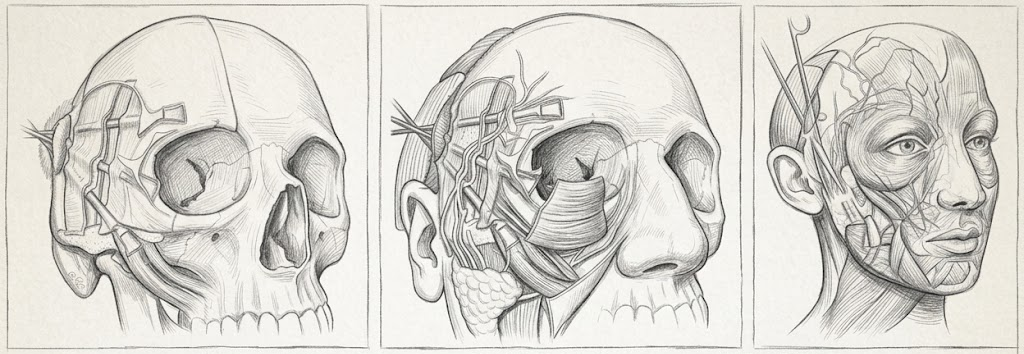
Surface tension on the skin leads to widened scars, earlobe distortion (“pixie ear”), and short-lived results. By entering the sub-SMAS deep plane, releasing retaining ligaments, and freeing the malar fat pad, the structural foundation is mobilized and repositioned without placing tension on the skin closure.
3. Anatomical Vertical Vector Elevation
Facial descent is driven downward by gravity. Pulling sideways (horizontally) flattens natural contours and stretches the mouth corners. Vertical elevation returns descended tissues to their original anatomical position, enhancing midface volume and smoothing nasolabial lines naturally.
Surgical Steps: From Incision to Deep Fixation
- Endoscopic Precision & Nerve Preservation: Using HD endoscopic cameras, the dissection safely navigates the parotid-masseteric fascia and masseteric space, directly visualizing and safeguarding facial nerve branches.
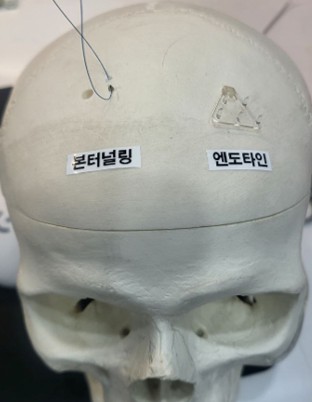
- Targeted Cable Suture Suspension: Sturdy surgical sutures are placed in the deep plane close to problem zones (nasolabial folds, jowls) and anchored securely to the dense deep temporal fascia and mastoid fascia.
- Controlled Redraping & Micro-Excision: Once deep structures are elevated vertically, redundant skin is redraped. Any residual skin excess is excised conservatively along the natural contours of the ear or behind the hairline.
- Vascular Preservation & Rapid Recovery: Avoiding broad, aggressive subcutaneous skin stripping preserves the subdermal capillary network, significantly minimizing bruising and accelerating healing.
Tailored Treatment Framework
Surgical plans are classified and customized according to individual anatomical aging patterns:
Frequently Asked Questions (FAQ)
Q1. Will I always have a scar in front of my ear?
Not necessarily. For patients with good skin tone and mild-to-moderate descent, all incisions are concealed inside the hairline and behind the ear. If significant skin excess is present, a delicate incision along the tragus or preauricular crease is utilized to remove redundant tissue cleanly.
Q2. How does this differ from traditional mini facelifts?
Traditional mini facelifts often only pull the skin or superficial SMAS laterally through a small skin cut, which can result in quick relapse and widened scars. The endoscopic deep plane technique releases the deeper ligaments and mobilizes the sub-SMAS layer directly, providing deep structural longevity with minimal surface tension.
Q3. What is the expected recovery timeline?
Because deep-plane dissection preserves skin blood circulation better than wide subcutaneous undermining, severe swelling and bruising generally resolve within 10 to 14 days. Most patients return to desk work and social activities within 2 weeks.
Surgeon’s Perspective
The Endoscopic Deep Plane Facelift is not a rigid, single-incision operation—it is a versatile philosophy. It pairs deep-layer anatomical repositioning with an incision plan calibrated strictly to how much skin excess actually exists.
By avoiding unnecessary cuts when skin elasticity is favorable, and executing precise, concealed tragal extensions when redundancy demands it, we achieve a natural, long-lasting rejuvenation that never looks “operated on.”


Medical Disclaimer:The content provided on this blog is for informational and educational purposes only and does not constitute medical advice, diagnosis, or treatment. Individual surgical results may vary, and all medical or surgical procedures carry inherent risks. Always seek the advice of a qualified healthcare provider with any questions regarding a medical condition or treatment options.